
Bethlehem was one of our fixed visits on our last trip to Israel, either because of the history of the place or because of the morbo of moving to the Palestinian territories
As we planned the week, the question arose whether to visit Bethlehem by car, once we left Jerusalem after 3 days there, or whether we would give us time to make a small afternoon excursion from the Holy City. Seeing that the distance between them is only 8 km, and that in theory we would not be able to cross the West Bank with the rental car (although it later turned out that we did when we visited Jericho, without problems), we opted for this last option
Getting to Bethlehem from Jerusalem is as easy as taking bus 24 or 124 departing from Damascus Gate. It takes about 20 minutes and costs about 7 shekels. The bus leaves you on the Israeli side of the checkpoint that crosses the so-called "Wall of Shame", which must be crossed on foot (it does not take more than 5 minutes in which we were not asked for any documentation)
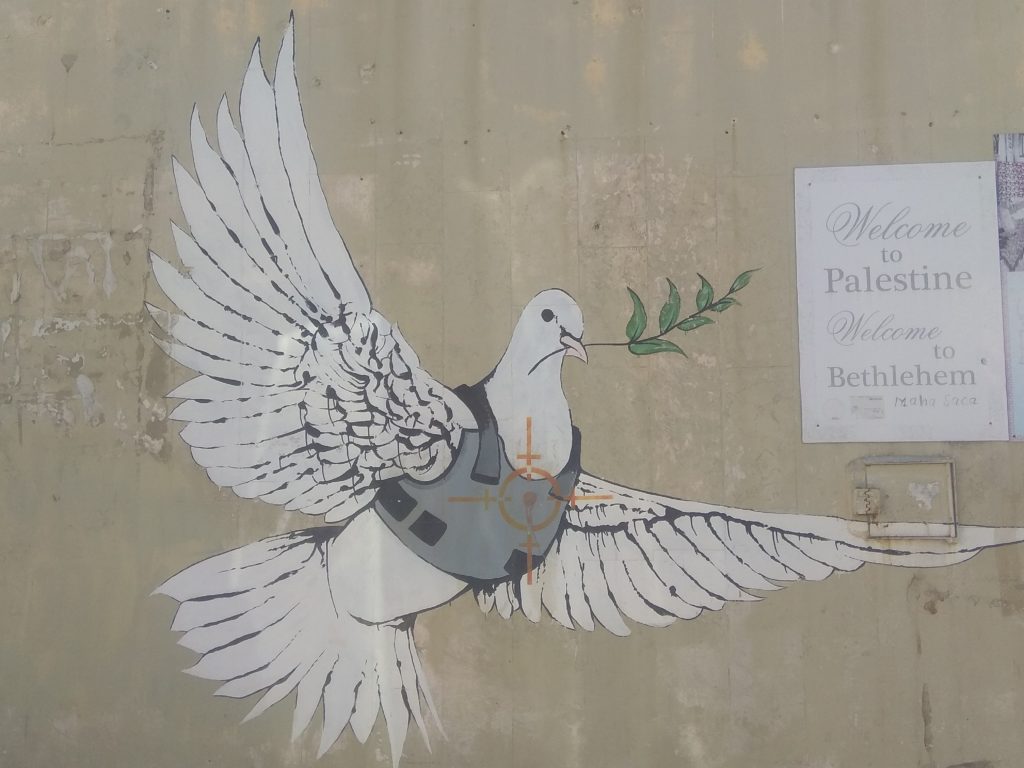
Once on the Palestinian side you will see that there will be a lot of taxi drivers eager to ride with them to get some shekels taking you to the sights of the city (mainly the Basilica of the Nativity and surroundings). Even if they try to make you think it's a long way, it's really a journey that can be done on foot in half an hour, also taking the most advantage of the graffiti that decorates the wall. We went in February and it wasn't too hot. Another thing would be to do the same tour in July or August.
The first thing that surprised us (pleasantly) of this first foray into the West Bank was the seemingly vibrant economic and commercial activity we saw. We expected a territory depressed by the blockade that involves being surrounded by a wall, but we found a city full of shops, restaurants, and even looked good cars and elegant houses from time to time (obviously far below Israeli neighbors)
The main attraction of Bethlehem is the Basilica of the Nativity, or what is the same, the place where according to tradition the birth of Jesus took place. It is a paleo-Christian building commanded to build in 530 A.D. by Emperor Justinian. Like the church of the Holy Sepulchre in Jerusalem, the temple is shared by the Greek Orthodox Church, the Armenian Apostolic Church and the Catholic Church, although they also have rights over it, although minor, the Syrian Orthodox and Copts.
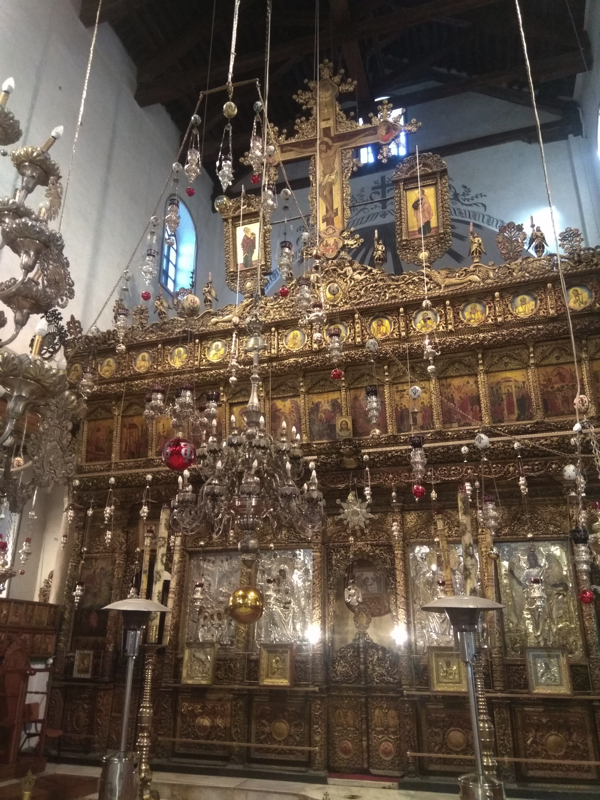
It is accessed by a door so small that you have to bend down to enter: the Gate of Humility. A sign of reverence and a way to prevent anyone from going on horseback. Once inside, the first thing we can contemplate is the golden altarpiece, surrounded by dozens of hanging lamps, and on your right, a huge queue of people waiting to go down to the Grotto of the Nativity, which is the precise place where Jesus is supposed to be born. You can also go down to the crypt, where you have the feeling of being in the portal of Bethlehem as we have seen it represented since we were children
Outside the basilica extends the Plaza del Pesebre, where we can find all kinds of souvenirs, certainly cheaper than in the city of Jerusalem. Not far from there is the Milk Grotto, which is, according to the Bible, the place where Mary and Joseph hid with newborn Jesus to avoid the slaughter of the day of the innocent. To get back to the wall, the best option is to get lost in the alleys that surround the nerve center of Bethlehem : Manger Square . This is where you can savor the authentic personality of an Arab city: street stalls of all kinds of food, barbershops and bazaars of the most strange objects, mixed with restaurants and souvenir shops. There is also a tourist office here
Once the most iconic paintings on the wall have been photographed, we find ourselves again crossing the checkpoint to return to Israel. Here we did show our passport although fortunately we did not have to queue much. It looks like the busiest hours are the first hours of the day to cross in this same direction. Obviously you can't take pictures inside. Once we crossed the border, we headed to the bus stop that would return us again to the Damascus gate
